Monday, July 11, 2011

Lake Bunyonyi


Last weekend, I went to Lake Bunyonyi with Caitlin and Christina. Bunyonyi is in Uganda, just north of the Rwandan border. We took a matatu two hours north, went through customs, and then took two taxis a couple more hours to the lake. We arrived shortly before sunset, and hopped in a canoe for the trip to the island.


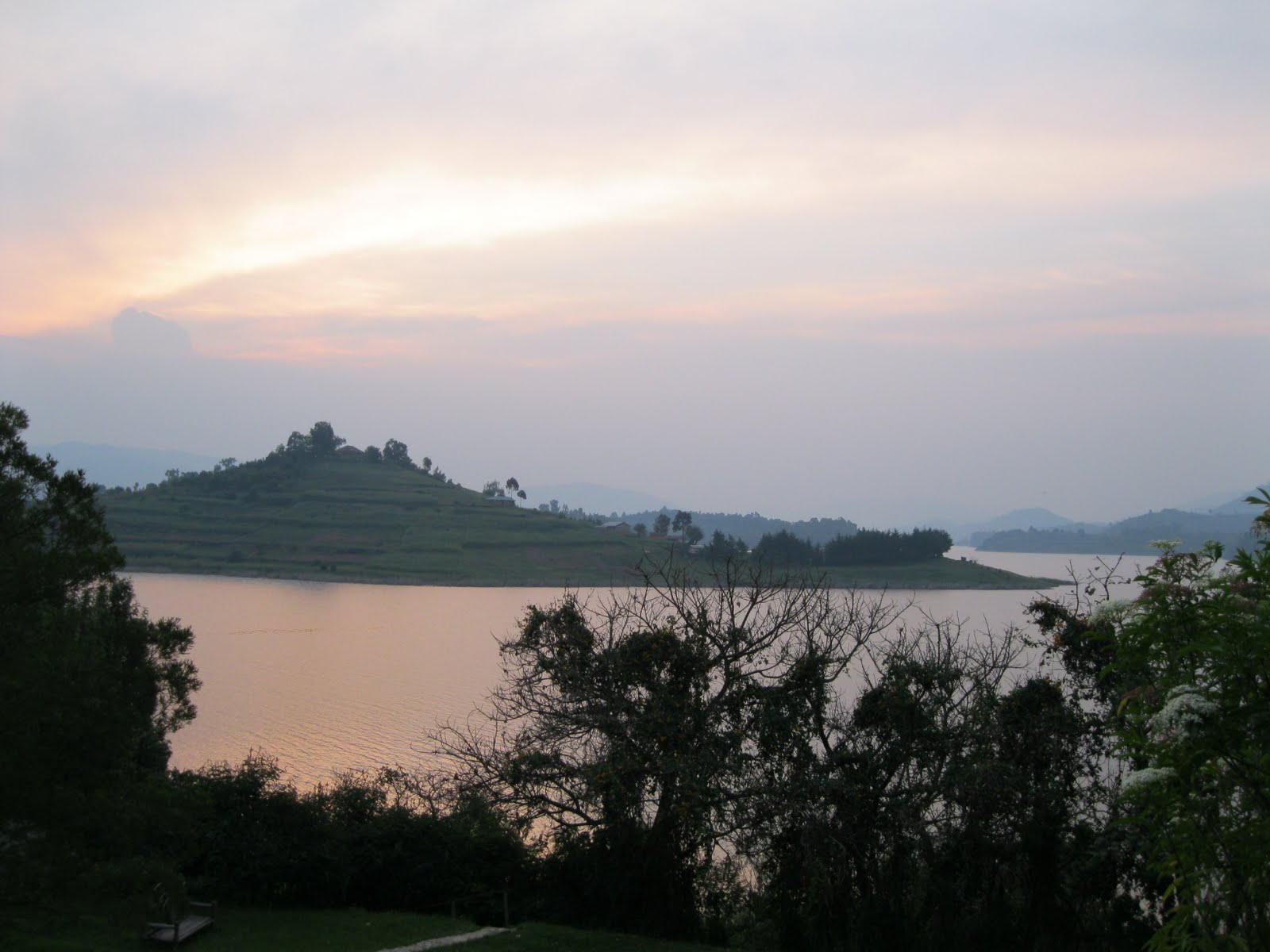
Bunyonyi is part of the African Rift Valley lakes, and though it is small, it is thought to be over 900 meters deep, making it the second deepest lake in Africa. It is dotted with dozens of small islands, many of which house their own resorts and campgrounds.


The accommodations are rustic, but comfortable. The cabins have solar hot water heaters and electricity, and the food in the restaurant is excellent.

The view from the shower was terrific.

Travel companions Caitie and Christina

Saturday we slept in, ate a leisurely breakfast, and rented a dugout canoe to go out on the lake. Upon learning how to steer, we went to another small island a couple kilometers away where we found a rope swing and a dock to lay out on. (Sorry, no photos- I was pretty sure that we were going to capsize, so I didn't bring my camera.) We returned to our home island before sundown, and joined a group of Scandinavian travelers for a game of soccer. My team lost, but I improved greatly in the hour that we played.

We then settled down for another enormous meal of delicious lake crawfish.


Seriously, the food was delicious.

Thursday, July 7, 2011

Bujumbura


A couple weeks ago, I went with a group of friends to Bujumbura, the capital of Burundi. Burundi is just south of Rwanda- in pre-colonial Africa, they were both part of the Kingdom of Rwanda, so they share the same ethnic makeup and language. It had a civil war which ended in 2004, so they are still very much on the rebound. Bujumbura is not as clean and orderly as Kigali, and overall seems poorer, but has some very nice clubs and restaurants.

We stayed in a bungalow on the shore of lake Tangyanika, the second largest lake in the world by volume (4500 cubic miles) and the second deepest lake in the world (4,800 feet at the lowest point.) By comparison, lake Superior has only 2900 cubic miles and is 1300 feet deep. I'm told the diving is terrific, but recommended only for the experienced.

There's not a ton to do in Bujumbura, except eat/drink/hang out at the lake, but we heard about a zoo in the city.

This zoo was charming yet terrifying, as only a zoo in the developing world can be. Here in the reptile house, our guide pulled a large viper out of his cage and set it on the floor so we could pet it. He also walked into a crocodile cage to tease one with a stick that was not very long.

The chimp, Tina, was a little more worrying for me than the snakes, what with the news stories in the last few years about people being mauled and killed by 'domesticated' chimpanzees. She tried to pull off peoples' clothes, jackets, rings, and bracelets.

The leopard was surprisingly similar to a housecat- playful, rubbing against the bars and letting us scratch her through the wire.

We also went into a cage with a monkey, who jumped around on our arms and heads for about half an hour before he started getting wound up and biting people.


We hung out a lot of the time at Bora Bora, a lakeside restaurant with a pool and delicious food, and at the Havana Club, a swanky night spot for dancing. Cool trip overall, mostly because of the people who shared it.

Monday, May 30, 2011

Sunday, May 29, 2011

Kibuye

I went to Kibuye on Friday with some of my housemates- partly for my birthday, partly just to get out of the city for a bit.

As you can see, it's beautiful there. Kibuye is on the southern part of lake Kivu, one of the African Great Lakes in the region. A couple of us woke up at 5 am on Saturday to catch the sunrise:


This is the view from the night before, before a little rain:

Monday, April 4, 2011

Enjoying the Little Things

Rwanda is now 50% more 'extreme.'
Mountain Dew-


and bagels. Both of which I haven't had in 5+ months, and both of which I have become very fond of through their absences.

Wednesday, March 2, 2011

A Quick Word About Microfinance

My friend Anthony and I have a blog where we occasionally discuss various political issues. He posted a question some weeks ago concerning microfinance, which you can read here. Here is my response:


Microfinance is lauded by some as a silver bullet which will rescue poor societies by allowing people to pull themselves up by their bootstraps, through providing financial services, training, and small loans to poor entrepreneurs. When microfinance is at its best, this is exactly what it does. It provides the means for people to provide for their families, save money, and improve their living situations. It avoids some of the problems of the traditional aid models, such as relying on corrupt governments, skewing local markets, and building dependence among the poor. Microfinance banks have typically targeted women, which has resulted in more freedom and empowerment for them; loans reduce the vulnerability of the poor during crises like sickness and drought. Repayment rates are typically high, and World Vision has reported increases in health and education, as families with loans are able to afford better living conditions and school fees.

But it comes with problems of its own. One obvious one is that microfinance, like any other tool, can be mishandled. It is not free from problems such as fraud, usury, and human error, just like other banks. Anthony mentions wealth disparity as a problem that might arise; to be frank, the real problem is nearly the opposite of this. The fact is that microfinance does little to help the poorest of the poor. They are usually trapped in subsistence activities, and if their loan does not help them grow their income beyond the interest rates, they will be worse off in the end. Most people in the developing world are not true entrepreneurs who have a visionary idea which can turn into profit and jobs for their community; 90% of these populations would be most benefited by a factory moving to their area and providing jobs. The International Labor Organization says that “nothing is more fundamental to poverty reduction than employment.”

So if a micro-entrepreneur is able to use a loan and develop a business where he can employ 100 people in his community, that will be far better than those 100 people getting their own loans to fund subsistence activities. The factory is able to access economies of scale and increase productivity; 100 women with their own sewing business simply crowd the market.

So to answer your question, in 10-20 years the criticism of microfinance will be that it wasn't able to deliver on the promise of curing poverty. It still is a good idea, and still helps millions of people around the world to provide for their families and defend against crises. But large-scale enterprises intensive in labor, public or private, will go much farther towards pulling societies out of poverty.